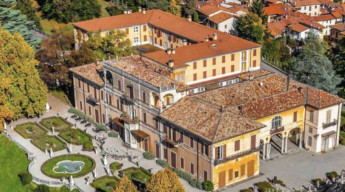
Notes from the CORE International board meeting held on
2026, April 16th at Villa Vigoni.
Participants:
Franz Müller, D2041 – Anna Arnoldi, D2041 – Alberto Barzano, D2042 – Klaus Günther Strack, D1830 – Joerg Hochhausen, D1930 – Christel Althausen, D 1830 – Peter Fedon, D1830 – Jean-Luc Perrin, D1710 – Patrick Fassnacht, D1710
Main conclusions, session by session.
A_ Foĺlow-up of Archamps: the main decisions the International board was aware are 1) postponing RES by one year (new proposal 16.-18.04.2027); in 2028 it will be held in Germany and in 2029 in France, completing the second cycle, 2) TNSP started successfully its 4th edition, 3) good progress on the NGSE project with new ideas popping up (we now need contact persons for the French and the Italian Section) and 4) the project “Rotary connects EU” finalized a presentation on CORE to be presented, if possible, to all our clubs. It was decided that twinnings are supported and sponsored by CORE, but they are not a main activity. A list on Twinnings is maintained by the secretaries, Contacts in the French and the Italian Section to be defined.
B_ CORE and the young generation: the importance getting Rotaractors on board was unanimously recognized, the question, how and who? Italy and Germany have close to 300 rotaractors when France is limited to 50. Rotaractors were invited to the various conferences but with little success so far. Important is WE make CORE attractive! What do we offer!
It will be to the “Recruitment and Communication” section of each Subnational Inter-district board to strongly contribute to this important mission. Beyond Rotaract, one entry point is to connect to all participants to the past RES events; lists of Alumni exist and could be used. Recruitment criteria is the age, be rotaractor or not.
C- CORE re-structuring: we have moved to “subnational ICCs” with different namings in our three countries, like CIDIP (Comité InterDistrict InterPays) AURA for France. The latter association has structured into 3 commissions: Finances, Running and New projects and recruitment and communication. Each member of the association is invited to give a contribution in one of the commissions. Germany and Italy have agreed to put a similar structure in place.
In connection with point B above, it is proposed to have one “young representative”, age below 40 years, as a member of the national board. Each board is then represented to the international board by 4 members, ideally including the “young” member.
Two recent projects require some attention and follow-up by the “Running and New projects” commissions: the NGSE project and the Rotary connects EU; for both we need more volunteers.
D- Participation of non-CORE districts Clubs: for the time being there is nostrong push to get new districts into CORE; we need to stabilize first! But we support the idea to have a club from a non-Core district participating in one or the other program (like RC Haguenau collaborating with Bergamo and Ludwigsburg on a school exchange program). For the RES we encourage it even more; each ICC could accept up to 3 participants per country from non-Core districts. Opening to new districts, ideally geographically close, would be possible only under the condition to be accepted by the acting governor of this non-CORE district.
E- Next conference: Kehl near Strasbourg, October 10th. One day conference, day before/after visit to the Parliament and to the old town. Key note speech by local ambassador.
We also fixed the date of the next CORE international board meeting and of the CORE Conference of 2027 (respectively in April 2027, in the Villa Vigoni or in the DFI of Ludwigsburg and 15-17 October, in Lombardy).